
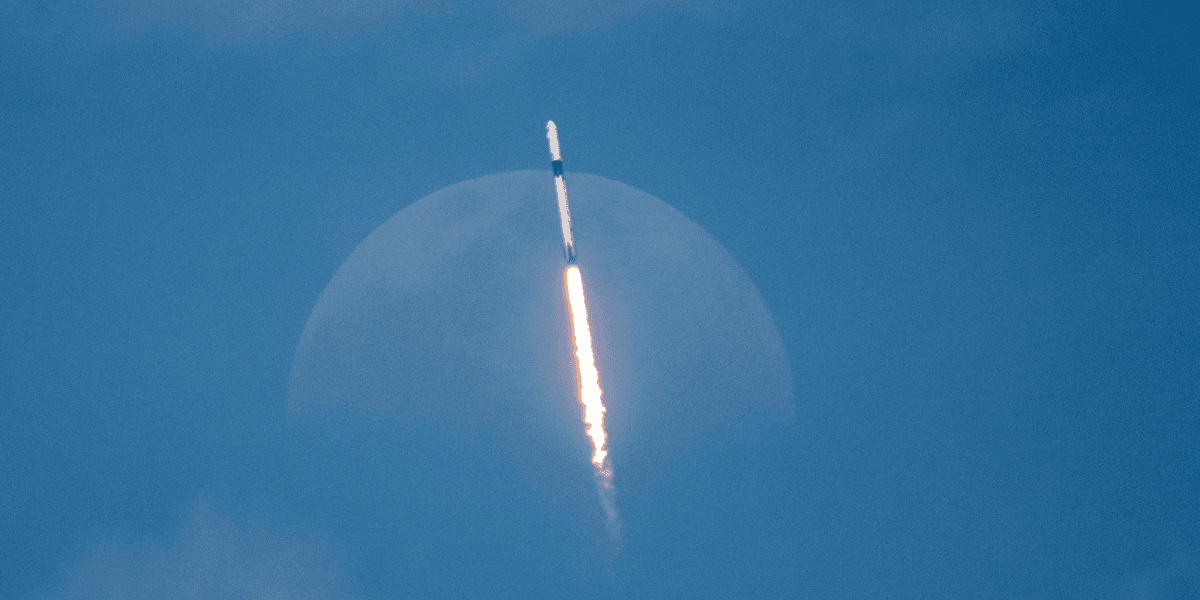
NASA's SpaceX rocket launch creates a glowing jellyfish effect across the eastern United States, captivating skywatchers and highlighting space science.
A mysterious glowing formation stretching across the early morning sky captured attention along the eastern United States this week. What appeared to be an enormous luminous jellyfish was actually the illuminated exhaust plume of a SpaceX Falcon 9 rocket carrying supplies to the International Space Station. On October 14, 2026, NASA published images explaining the remarkable phenomenon, which followed the rocket's successful liftoff from Florida the previous morning. The unusual sight demonstrated how sunlight, atmospheric conditions, and spaceflight technology can combine to create an extraordinary display visible from the ground.
NASA SpaceX Rocket Launch Captures Attention Across The East Coast
The SpaceX Falcon 9 rocket launched at 6:33 a.m. Eastern Daylight Time on October 13, 2026, from Space Launch Complex 40 at Cape Canaveral Space Force Station in Florida. The rocket carried an uncrewed Dragon spacecraft loaded with scientific investigations, equipment, and essential supplies for astronauts aboard the International Space Station. The flight marked SpaceX's 35th commercial resupply services mission for NASA, continuing a partnership that supports scientific research and daily operations in orbit.
As the rocket climbed through the atmosphere, its exhaust expanded into a broad, glowing formation. The display became visible across portions of the eastern United States, including areas as far north as New York. Observers reported an unusual illuminated cloud with a shape resembling a jellyfish. NASA photographer John Kraus documented the phenomenon, and the agency published an explanation on October 14, helping the public understand the science behind the striking appearance.
What Caused The Glowing Jellyfish In The Morning Sky?
The spectacular formation resulted from a natural interaction between rocket exhaust and sunlight. Although the ground remained relatively dark before sunrise, the rocket traveled high enough for its exhaust plume to catch sunlight already reaching the upper atmosphere. As the exhaust expanded, the illuminated particles created a large, glowing cloud against the darker sky.
This effect is commonly known as a space jellyfish because the spreading plume resembles the rounded body and flowing tentacles of a jellyfish. Such displays are most noticeable during rocket launches near sunrise or sunset, when the contrast between the dark ground and sunlit upper atmosphere is particularly strong.
The phenomenon is not evidence of unusual atmospheric activity or an unidentified object. Instead, it offers a visible example of how sunlight interacts with materials released during a rocket launch. Understanding these conditions can help residents identify similar formations during future missions.
SpaceX Mission Supports Research Aboard The International Space Station
Beyond the unusual visual display, the mission carried an important scientific purpose. The Dragon spacecraft was transporting research materials, supplies, and equipment to the International Space Station, where astronauts conduct experiments in the unique conditions of orbit.
The station provides an environment where scientists can study how materials, biological systems, and physical processes behave under microgravity. Research conducted aboard the station contributes to scientific knowledge and helps engineers prepare for longer missions beyond Earth.
NASA scheduled the Dragon spacecraft to rendezvous and dock with the station on October 15, 2026. The agency announced that coverage of the docking operation would begin at 9:15 a.m. Eastern Daylight Time. As of October 14, the docking remained an upcoming mission milestone.
The flight also demonstrated the continuing importance of commercial spacecraft in supporting orbital research. Through commercial resupply missions, NASA works with private aerospace companies to transport equipment and scientific materials while maintaining operations aboard the orbiting laboratory.
Why The SpaceX Launch Matters To New York Residents
Although the rocket departed from Florida, its illuminated exhaust plume attracted attention across a much larger geographic area. The visibility of the formation along the East Coast demonstrated how high altitude events can be observed hundreds of miles from their original location.
For New Yorkers, the sight offered an unexpected connection to the nation's expanding space research activities. Residents do not need to live near a launch facility to witness certain effects of spaceflight. Under suitable conditions, rocket exhaust plumes can become visible across several states.
The event also highlighted the value of reliable scientific information. Unfamiliar objects or unusual lights in the sky can generate confusion, especially when photographs circulate rapidly online. Explanations from established scientific organizations help people distinguish documented atmospheric phenomena from unsupported interpretations.
Understanding Future Rocket Launches And Skywatching Opportunities
The October 2026 SpaceX launch provided a memorable example of how scientific operations can produce remarkable sights beyond their immediate launch locations. However, similar displays cannot be guaranteed during every mission. Their visibility depends on launch timing, atmospheric conditions, rocket trajectory, cloud cover, and the observer's location.
People interested in understanding future rocket activity can consult NASA's official website at www.nasa.gov for mission announcements, scientific explanations, and coverage of International Space Station operations. Following verified mission updates provides useful context when unusual formations appear in the sky.
As NASA continued documenting the October 13 launch on October 14, the glowing jellyfish phenomenon offered more than a striking photograph. It connected an important space station resupply mission with a visible lesson in atmospheric science, reminding Americans that major scientific achievements can sometimes be witnessed far beyond the launchpad.

Empire State Review Contributor
This article features branded content from a third party. Opinions in this article do not reflect the opinions and beliefs of Empire State Review.
You May Also Like

Nexuslive Limited Opens New Possibilities For Sports Storytelling In The Digital Age
Nexuslive Limited Opens New Possibilities For Sports Storytelling In The Digital Age

Kaikhan Salakhov: The Geometry of Future Minds
Kaikhan Salakhov: The Geometry of Future Minds

Open House New York Weekend 2026 Opens 300 Destinations Across NYC For Architecture And Cultural Exploration
Open House New York Weekend 2026 Opens 300 Destinations Across NYC For Architecture And Cultural Exploration

Indigenous Peoples Day 2026 Highlights Native American Heritage And Cultural Celebrations Across New York
Indigenous Peoples Day 2026 Highlights Native American Heritage And Cultural Celebrations Across New York

New York State Launches Path Through History Weekend With Special Events Across The Empire State
New York State Launches Path Through History Weekend With Special Events Across The Empire State