
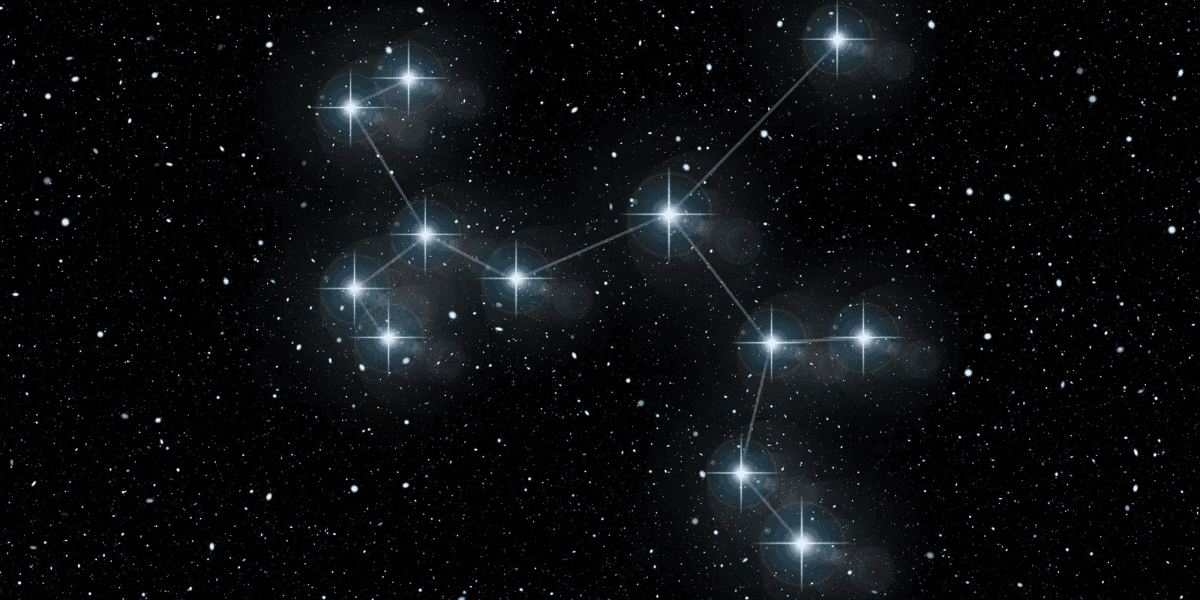
NASA's James Webb Space Telescope reveals hidden young stars in NGC 7129, offering a remarkable new view of how stars form in space.
UNITED STATES, October 6, 2026. Deep within a cloud of gas and dust, thousands of light years from Earth, young stars are taking shape in a region that has long challenged astronomers seeking to understand the earliest stages of stellar life. On Tuesday, NASA revealed new observations from the James Webb Space Telescope, offering a clearer view of this distant environment and the powerful activity taking place within it.
The newly released image focuses on NGC 7129, a stellar nursery located approximately 3,300 light years from Earth. Webb's advanced infrared instruments have revealed numerous stars previously hidden behind thick clouds of cosmic dust. The observations provide scientists with valuable information about how young stars interact with surrounding material as they develop.
James Webb Space Telescope Reveals A Hidden Stellar Nursery
NGC 7129 is a region where stars are forming within dense clouds of gas and dust. These environments contain the raw materials needed for stellar development, but their thick layers of dust can make detailed observations difficult for traditional optical telescopes.
The James Webb Space Telescope addresses this challenge by observing the universe primarily in infrared light. Infrared observations allow astronomers to study features that may remain obscured at visible wavelengths, revealing structures and objects that would otherwise be difficult to examine.
NASA's October 6 announcement highlighted Webb's ability to expose previously hidden stars and capture activity associated with stellar jets. These streams of material emerge from young stars and interact with surrounding gas, producing complex structures within the region.
The observations offer a striking example of how modern telescope technology can improve scientific understanding of environments located far beyond our solar system.
Understanding How Young Stars Shape Their Surroundings
Star formation begins when dense regions within enormous clouds of gas and dust collapse under gravity. As material gathers, a developing star begins to form, surrounded by matter that may continue to fall inward.
During this early stage, young stars can release powerful jets of material into their surroundings. These jets interact with nearby gas and dust, influencing the structure of the clouds in which the stars are developing.
Studying these interactions helps astronomers understand the physical processes involved in stellar growth. It also provides insight into how energy and material move through star forming regions.
The new Webb observations of NGC 7129 offer researchers another opportunity to investigate these processes in greater detail. By examining the structures associated with young stars, scientists can build a more complete picture of the conditions that influence their development.
Why NASA's Discovery Matters For Space Science
The importance of the new observations extends beyond the appearance of the image. Understanding star formation is essential to explaining how galaxies develop and how planetary systems eventually emerge.
Stars are responsible for producing many of the chemical elements found throughout the universe. Over their lifetimes, stellar processes contribute to the formation and distribution of material that can later become part of new stars, planets, and other celestial objects.
Regions such as NGC 7129 therefore provide natural laboratories for studying some of the processes that shape the universe.
Webb's infrared capabilities make it possible to investigate these environments with greater sensitivity and detail than many earlier observations. Each new image adds to a growing collection of scientific data that researchers can use to test theories and identify questions for future study.
A Major Achievement For American Space Technology
The James Webb Space Telescope represents a major international scientific effort led by NASA in partnership with the European Space Agency and the Canadian Space Agency.
Launched in December 2021, the observatory was designed to investigate distant galaxies, the formation of stars and planets, and the atmospheres of certain planets beyond our solar system.
Its scientific instruments allow researchers to examine infrared radiation from objects across enormous cosmic distances. This capability has made Webb an important resource for astronomers studying both the early universe and regions of ongoing stellar formation.
The October 6 observations demonstrate how the telescope continues to contribute to scientific research years after its launch.
For researchers, educators, and students across the United States, Webb's discoveries provide opportunities to explore complex scientific questions through detailed observations of the universe.
What The New Findings Mean For Future Research
The image of NGC 7129 does not represent the end of an investigation. Instead, it provides additional observational evidence that scientists can examine alongside existing research on stellar development.
Astronomers can use such observations to study how young stars influence their surroundings and how the distribution of gas and dust changes during stellar formation.
Future research may combine Webb observations with information collected by other observatories, allowing scientists to examine the same regions at different wavelengths.
This approach can reveal different physical properties of celestial objects and improve the interpretation of complex astronomical environments.
For the public, the latest release also offers an accessible introduction to the science behind star formation. Images of distant stellar nurseries make processes that unfold across enormous distances and timescales easier to visualize and understand.
A New Window Into The Origins Of Stars
NASA's October 6 announcement underscores the continuing importance of the James Webb Space Telescope in modern astronomy.
By revealing stars hidden within NGC 7129 and documenting the activity surrounding them, Webb provides another detailed view of how stars begin their lives.
The observations reinforce a central lesson of space exploration: Even familiar astronomical processes can reveal new details when scientists gain access to more advanced instruments.
For readers interested in astronomy, the discovery offers a meaningful opportunity to learn how stars form, how telescopes investigate distant regions, and why continued scientific observation matters to our understanding of the universe.

Empire State Review Contributor
This article features branded content from a third party. Opinions in this article do not reflect the opinions and beliefs of Empire State Review.
You May Also Like

Kaikhan Salakhov: The Geometry of Future Minds
Kaikhan Salakhov: The Geometry of Future Minds

New York State Launches Path Through History Weekend With Special Events Across The Empire State
New York State Launches Path Through History Weekend With Special Events Across The Empire State

Cleveland Guardians Defeat Chicago White Sox 9 To 5 And Force Decisive ALDS Game 5
Cleveland Guardians Defeat Chicago White Sox 9 To 5 And Force Decisive ALDS Game 5
Animal Hospital Of Sullivan County Brings Compassion To Every Chapter Of A Pet’s Life
Animal Hospital Of Sullivan County Brings Compassion To Every Chapter Of A Pet’s Life

New York City Celebrates Polish Heritage With 89th Annual Pulaski Day Parade On Fifth Avenue
New York City Celebrates Polish Heritage With 89th Annual Pulaski Day Parade On Fifth Avenue