

From energy volatility to supply chain disruption: three entrepreneurs show how Italy’s ecosystem is adapting and innovating in a changing world.
Matteo Valléro – Italian Editorialist and Columnist
The global economy is once again facing a period of heightened uncertainty, driven by persistent energy market volatility, shifting trade dynamics, and ongoing disruptions across international supply chains. For Europe’s manufacturing powerhouse, Italy, the pressure is particularly intense. As energy prices fluctuate and logistics networks remain strained, businesses rooted in the “Made in Italy” tradition are being tested like never before.
Italian enterprises, which rely heavily on imported energy and raw materials to sustain their export-driven economy, are navigating one of the most challenging periods in recent decades. Yet, the Italian entrepreneurial fabric has historically demonstrated a unique resilience, grounded in adaptability, craftsmanship, and long-term vision. To understand how key sectors are responding, we spoke with three leading voices from distinct pillars of the “Made in Italy” ecosystem.
The Land and the Vines: Protecting the Heritage
The wine and agricultural sector is particularly vulnerable to global energy fluctuations. It is not only about the cost of fuel for agricultural machinery or electricity for production facilities; the ripple effects extend to packaging, logistics, and international distribution networks.
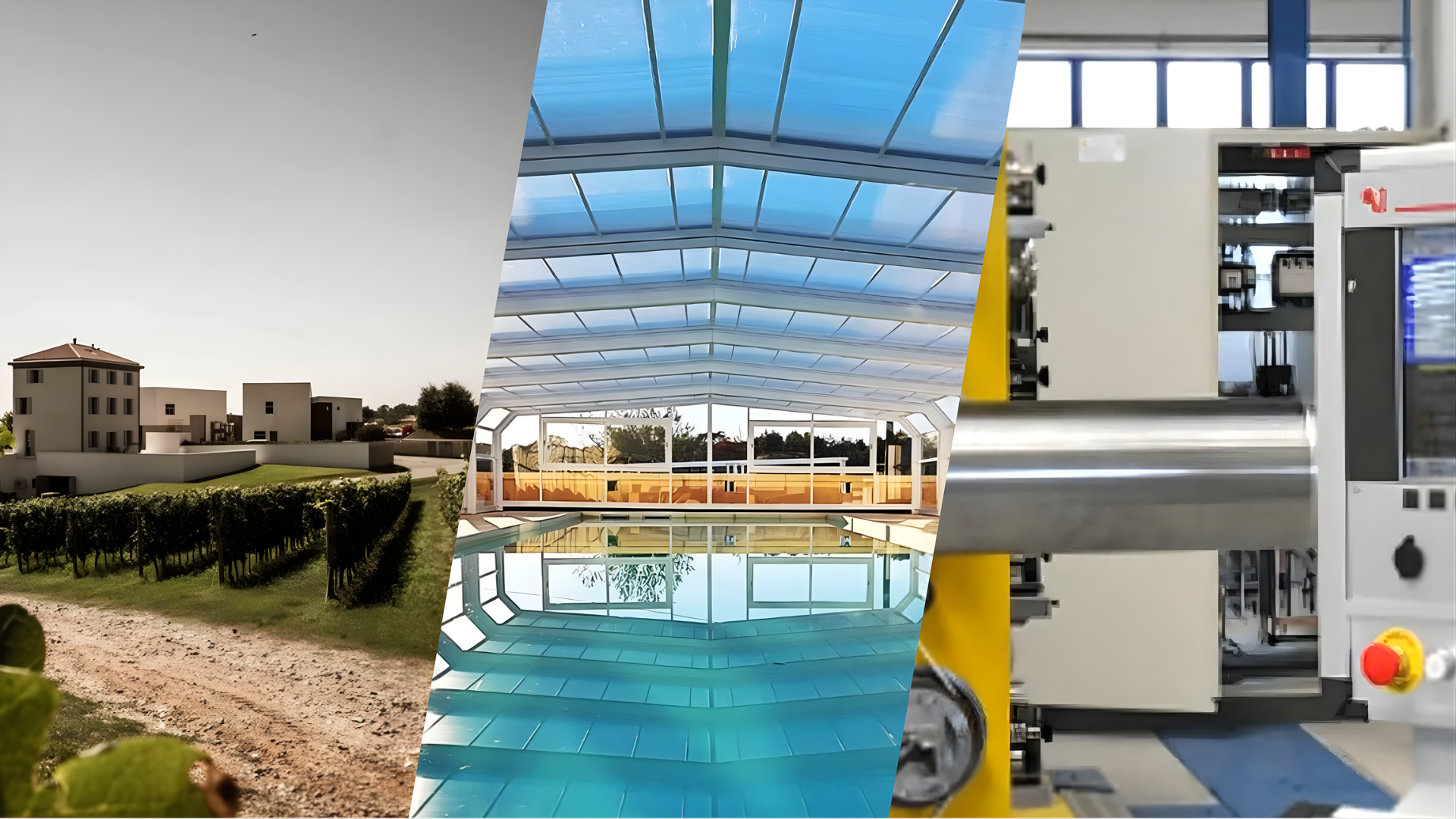
Francesco Serafini of Serafini & Vidotto is a recognized excellence in the Italian wine landscape. In an agricultural sector already strained by climate-related challenges, rising operational costs are significantly impacting packaging, materials, and global shipping efficiency.
How is your winery adapting its export strategies, particularly toward the U.S. and Asian markets, in such a volatile environment?
“For a company of our size, representing the network of small and medium enterprises that has made the history of “Made in Italy,” it is inevitable to feel exposed in such a difficult moment. The rise in energy costs, the spike in glass and packaging prices, and the instability of international market routes directly influence our ability to plan with confidence, especially in distant markets like the U.S. and Asia.
Faced with this scenario, our response cannot rely on improvisation but rather on what has always been our greatest strength: style, coherence, absolute attention to quality, and virtuous practices throughout the entire supply chain.
We cannot force the market to consume, especially when the final product reaches American or Asian tables with inevitably higher costs. But we can continue to build value. Today, the real strategy is to strengthen the cultural meaning of our wine and our work.
In international markets, we don’t just sell a product; we promote a vision of quality of life, the pace of nature, patience, and Italian identity. This narrative, supported by consistency over time, can resonate with sophisticated consumers who recognize authentic excellence.
For this reason, rather than chasing short-term dynamics, we continue to invest in relationships with importers, high-end dining, and premium markets, establishing a credible presence and the identity of the Serafini & Vidotto brand and the people behind it.
In times of deep uncertainty, we believe that resilience can be born precisely from the ability to remain faithful to one’s values, turning tradition into a tool for trust and global competitiveness.”
Design and Sustainability: Energy Efficiency Against Rising Costs
If there is a sector where rising material costs meet energy pressures, it is outdoor design and luxury structural solutions. The increasing price of aluminum presents significant challenges, but also highlights an important opportunity: products that deliver measurable energy efficiency benefits.
Gianpiero Giraudi of AlphaCover represents a unique niche in the “Made in Italy” landscape: high-end, custom telescopic pool covers.
How are you balancing manufacturing challenges while communicating the long-term efficiency value of your products to international markets?
“Today, AlphaCover is a mature company that has reached its 18th anniversary without losing its artisanal identity or its deep-rooted connection to the “Made in Italy” tradition. In a complex global landscape, marked by rising raw material costs and supply chain pressures, we have chosen never to compromise on the quality and values that define us.
Telescopic covers are no longer perceived as merely an aesthetic option, but as a functional investment. As one customer told me: “Pool covers are no longer considered a luxury, but a convenience!”
It is no longer simply a matter of containing costs, but of increasing the value per unit produced, focusing on quality, durability, and customization.
Our covers are engineered not only to secure the pool and protect users but also to reduce heat loss, limit evaporation, and significantly lower heating and maintenance costs.
In short, the balance lies in a shift in perspective: instead of competing on price in an inflationary environment, we compete on overall value.
Our pillars remain clear: Safety, because we protect people and environments; Thermal protection, because we help preserve energy; and Low environmental impact, because every production choice is oriented toward sustainability.
This allows AlphaCover to evolve the commercial narrative from “product” to “solution,” emphasizing the long-term economic return for those who choose our brand. We do not just sell a product, but a lasting investment capable of combining design, efficiency, and environmental responsibility.”
Advanced Technology and the Cost of Innovation
In advanced manufacturing, the stakes are exceptionally high. Companies producing high-tech materials and components are highly energy-dependent. They also rely on specialized raw materials whose availability and pricing can fluctuate significantly in global markets.
Andrea Chinese of Composite Technical Systems (CTS) operates in a highly specialized, innovation-driven sector, creating ultra-lightweight composite cylinders.
How do you safeguard production margins and continue to innovate without passing unsustainable costs onto customers?
“I believe it all revolves around three key factors: timeliness, optimization, and targeted investments.
Timeliness refers to having a purchasing office that monitors fluctuations in raw material markets to issue purchase orders at optimal times. In many cases, procurement has become more dynamic and responsive to market conditions.
Optimization involves maximizing production windows while minimizing setup and line changes. It is crucial to establish agreements with customers that allow us to organize production efficiently, often achieved through structured long-term orders.
Targeted investments currently focus on energy savings and production through alternative sources. For example, we aim to compartmentalize areas that require energy-intensive climate control due to process-related requirements.
Additionally, we are expanding our photovoltaic system to improve year-round efficiency. By implementing complementary systems optimized for different seasonal conditions, we can ensure consistent support throughout the year while reducing exposure to cost fluctuations.”
The Numbers of Resilience: An Export Nearing €680 Billion
Supporting the strategies described by these individual companies are strong macroeconomic indicators. According to recent reports from SACE, Italian exports continue to demonstrate notable resilience.
Projections estimate that “Made in Italy” exports will reach approximately €679 billion in 2025. ISTAT data also indicate that rising input costs and logistical pressures are reshaping manufacturing structures, but key sectors continue to perform strongly.
The wine sector, for instance, has surpassed €8 billion in foreign turnover, driven significantly by demand in the United States.
SACE reports highlight how the main competitive lever for Italian companies lies in sustained investment in energy efficiency, sustainability practices, and Industry 4.0 innovation, factors that are helping maintain strong positioning in global premium markets.
The Italian Antifragility
The testimonies from the frontlines of Italian business, supported by system-wide data, reveal a shared direction: a shift from reactive pressure management to long-term strategic adaptation.
While global headlines emphasize uncertainty and disruption, Italian entrepreneurs are quietly re-engineering supply chains, investing in energy efficiency, and leveraging the premium value of their products as a buffer against cost volatility.
The current environment remains challenging, and visibility ahead is limited. But if history, and the voices of its business leaders, are any indication, the “Made in Italy” brand is not only enduring pressure; it is learning to evolve through it.
Explore how “Made in Italy” innovators are adapting to global challenges at Serafini & Vidotto, Alpha Cover, and CTSCYL.

Empire State Review Contributor
This article features branded content from a third party. Opinions in this article do not reflect the opinions and beliefs of Empire State Review.
You May Also Like

Animal Hospital Of Sullivan County Brings Compassion To Every Chapter Of A Pet’s Life
Animal Hospital Of Sullivan County Brings Compassion To Every Chapter Of A Pet’s Life

Carnegie Mellon Receives Historic $3 Billion Gift To Expand Research And Build Miami Campus
Carnegie Mellon Receives Historic $3 Billion Gift To Expand Research And Build Miami Campus

New York Scientific Data Summit Opens in Manhattan With Focus on AI’s Role in Science and Society
New York Scientific Data Summit Opens in Manhattan With Focus on AI’s Role in Science and Society

Hurricane Nolo Pounds Hawaii With Heavy Rain, Flooding, And Dangerous Surf
Hurricane Nolo Pounds Hawaii With Heavy Rain, Flooding, And Dangerous Surf

Akamai And Anthropic Sign $11.6 Billion Cloud Computing Deal As AI Infrastructure Demand Grows
Akamai And Anthropic Sign $11.6 Billion Cloud Computing Deal As AI Infrastructure Demand Grows