

On the night of April 22, 2026, skywatchers across the United States were treated to one of the most anticipated astronomical events of the spring season: the peak of the Lyrid meteor shower. Coinciding with Earth Day observances, the event offered a rare opportunity for the public to witness bright meteors streaking across clear night skies, with viewing conditions described by astronomers as among the most favorable in recent years.
The Lyrid meteor shower, one of the oldest recorded meteor showers in human history, originates from debris left behind by Comet Thatcher. While the comet itself will not return to the inner solar system for more than two centuries, Earth passes through its dust trail each April, producing a brief but vivid celestial display. According to astronomical forecasts, observers in dark-sky regions of the United States could see as many as 100 meteors per hour at peak activity under optimal conditions.
A Favorable Night for Viewing Across the United States
This year’s viewing conditions were particularly strong due to a crescent moon setting early in the evening, significantly reducing light interference. With minimal lunar brightness, meteor visibility improved across much of the country, especially in rural and designated dark-sky areas.
The best viewing window in the United States occurred between approximately 10:30 p.m. and dawn local time, when the Earth’s rotation positioned observers directly facing the incoming meteoroid stream. Skywatchers were advised to avoid artificial light and allow their eyes at least 20–30 minutes to adjust to darkness for optimal visibility.
Popular viewing locations included well-known dark-sky regions such as Death Valley in California, Big Bend in Texas, and Cherry Springs in Pennsylvania. These areas, already favored by amateur astronomers, provided some of the clearest and least light-polluted skies in the country.
What Causes the Lyrids
The Lyrid meteor shower occurs when Earth crosses the orbital path of Comet Thatcher, a long-period comet discovered in 1861. As the comet travels through the solar system, it leaves behind a trail of dust and small particles. When these particles enter Earth’s atmosphere at extremely high speeds, around 104,000 miles per hour, they burn up due to friction, producing bright streaks of light commonly known as meteors or “shooting stars.”
Unlike some meteor showers that produce long, sustained peaks, the Lyrids are known for their relatively short but sometimes intense bursts of activity. They are also notable for occasional fireballs, exceptionally bright meteors that can briefly illuminate the sky and cast visible shadows on the ground.
Historically, the Lyrids have been observed for more than 2,000 years, with the earliest known records dating back to ancient China in 687 BCE. This long observational history makes the event one of the most consistently documented meteor showers in the world.
Science and Public Interest in Astronomical Events
Astronomers emphasize that meteor showers like the Lyrids are not only visually striking but also scientifically valuable. Each meteor represents a fragment of cosmic material that helps researchers better understand the composition of comets and the early solar system.
Modern observation methods, including ground-based cameras and radar tracking systems, allow scientists to analyze meteor trajectories, speed, and composition with increasing precision. While the Lyrids themselves are not hazardous, they contribute to broader planetary science efforts, including studies related to near-Earth objects and atmospheric entry behavior.
In recent years, public interest in celestial events has grown significantly, driven by increased access to real-time astronomical data, mobile sky-tracking applications, and improved awareness campaigns from observatories and science institutions.
Earth Day Connection and Public Engagement
The timing of the meteor shower coincided with Earth Day, a global observance held annually on April 22 to promote environmental awareness and appreciation of the planet. While the two events are unrelated in origin, the overlap created a symbolic moment for many observers, blending scientific curiosity with environmental reflection.
Across the United States, local astronomy clubs, universities, and public parks hosted informal viewing gatherings. Many encouraged participants to disconnect from digital devices and engage in “naked-eye astronomy,” a practice that requires no telescopes or binoculars and emphasizes direct observation of the night sky.
The National Park Service and various local agencies also highlighted dark-sky preservation efforts, underscoring how light pollution continues to limit visibility of natural astronomical phenomena in urban areas.
Key Takeaways
The 2026 Lyrid meteor shower served as a reminder of both the predictability and unpredictability of celestial events. While astronomers can forecast peak activity with reasonable accuracy, actual visibility always depends on weather, local conditions, and light pollution levels.
For many across the United States, the event offered a rare pause from daily routines and an opportunity to engage with a natural phenomenon that has been visible to humanity for millennia. It also reinforced ongoing scientific efforts to study meteoroids and improve understanding of Earth’s interaction with cosmic debris.
As the night concluded, observers were left with brief but memorable flashes of light across the sky, an annual reminder that even in an increasingly urbanized world, natural wonders remain visible to those who take the time to look upward.

Empire State Review Contributor
This article features branded content from a third party. Opinions in this article do not reflect the opinions and beliefs of Empire State Review.
You May Also Like

Animal Hospital Of Sullivan County Brings Compassion To Every Chapter Of A Pet’s Life
Animal Hospital Of Sullivan County Brings Compassion To Every Chapter Of A Pet’s Life

Carnegie Mellon Receives Historic $3 Billion Gift To Expand Research And Build Miami Campus
Carnegie Mellon Receives Historic $3 Billion Gift To Expand Research And Build Miami Campus

New York Scientific Data Summit Opens in Manhattan With Focus on AI’s Role in Science and Society
New York Scientific Data Summit Opens in Manhattan With Focus on AI’s Role in Science and Society
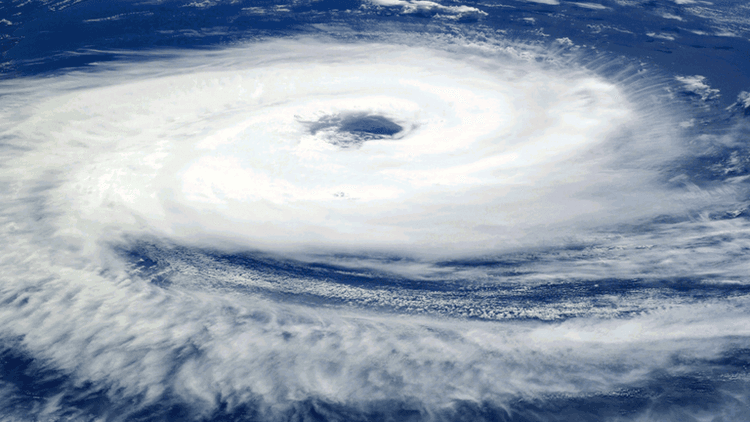
Hurricane Nolo Pounds Hawaii With Heavy Rain, Flooding, And Dangerous Surf
Hurricane Nolo Pounds Hawaii With Heavy Rain, Flooding, And Dangerous Surf

Akamai And Anthropic Sign $11.6 Billion Cloud Computing Deal As AI Infrastructure Demand Grows
Akamai And Anthropic Sign $11.6 Billion Cloud Computing Deal As AI Infrastructure Demand Grows